Behind Every Box, a Craft
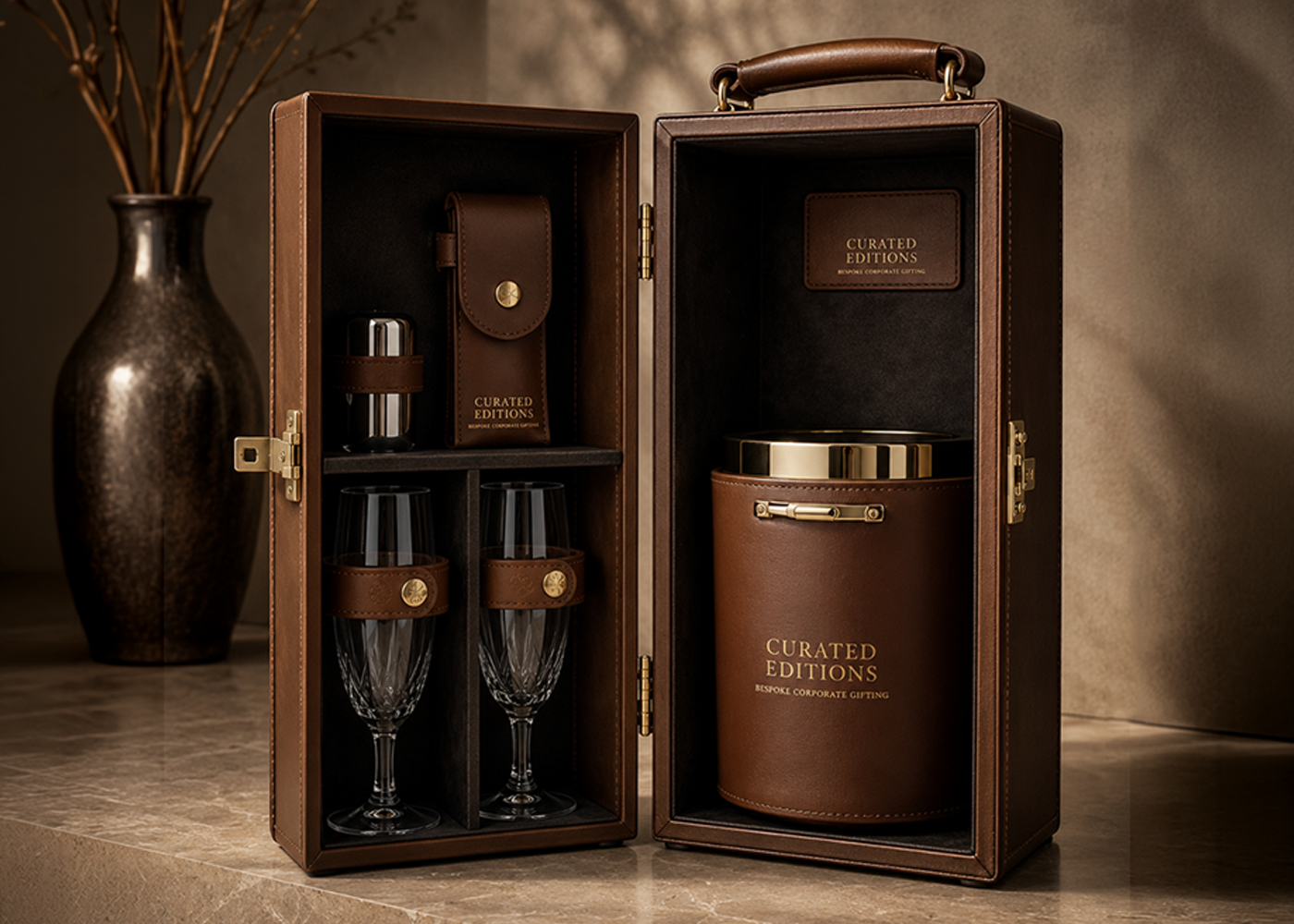
A finished gift looks effortless. That is, in fact, the entire point of good craftsmanship — to hide the labor so completely that what remains is simply the object, quiet and complete. But behind every piece that leaves our studio is a process most recipients never see: material sourced with care, proportions tested and revised, finishes chosen not for how they photograph but for how they age.
## Why material is a decision, not a default
It would be easy to gift the same three or four materials to every client, every season. It would also be forgettable. Every material carries its own associations — the coolness and permanence of brushed metal, the warmth and imperfection of natural wood, the quiet formality of leather, the tactile luxury of a well-chosen fabric wrap. Choosing the right one for a given client, occasion, and message is not a stylistic flourish. It is the first and most important decision in the entire process, because it sets the emotional register for everything that follows.
We ask, before any design work begins: does this gift need to feel timeless, or celebratory? Personal, or prestigious? Warm, or precise? The material answers half that question before a single design element is added.
## Proportion is where luxury is won or lost
Scale is one of the most underestimated elements of gifting design. A box that is slightly too large feels wasteful. One slightly too small feels cramped, as though the contents were an afterthought. The right proportion — where the object fits its container the way a well-tailored jacket fits its wearer — is achieved through iteration, not guesswork. It’s rarely noticed when done correctly, and always noticed when it isn’t.
## Finish: the last five percent that matters most
The difference between a good gift and a memorable one often comes down to finishing details most people couldn’t name if asked, but would instantly recognize as missing: an edge that’s been sealed rather than left raw, a hinge that closes with resistance rather than a rattle, a ribbon whose weight matches the box rather than fighting it. These are not decorative flourishes added at the end. They are structural decisions that determine whether an object feels considered or merely correct.
## Personalization as craft, not printing
True personalization goes beyond a name embossed on a lid. It considers how a name, a message, or a monogram sits within the composition of the piece as a whole — its placement, its scale, the material it’s rendered in. Done well, personalization looks inevitable, as though the piece could never have existed any other way. Done poorly, it looks appended.
## The philosophy behind the process
None of this is about complexity for its own sake. It’s about respecting the moment a gift represents enough to get every invisible decision right, so that what the recipient experiences is simple: a beautifully made object that clearly wasn’t an afterthought.
That’s the craft we bring to every commission at Curated Editions — not visible in the finished piece, but felt in every part of it.