Gifting Etiquette in the Gulf: What International Companies Often Miss
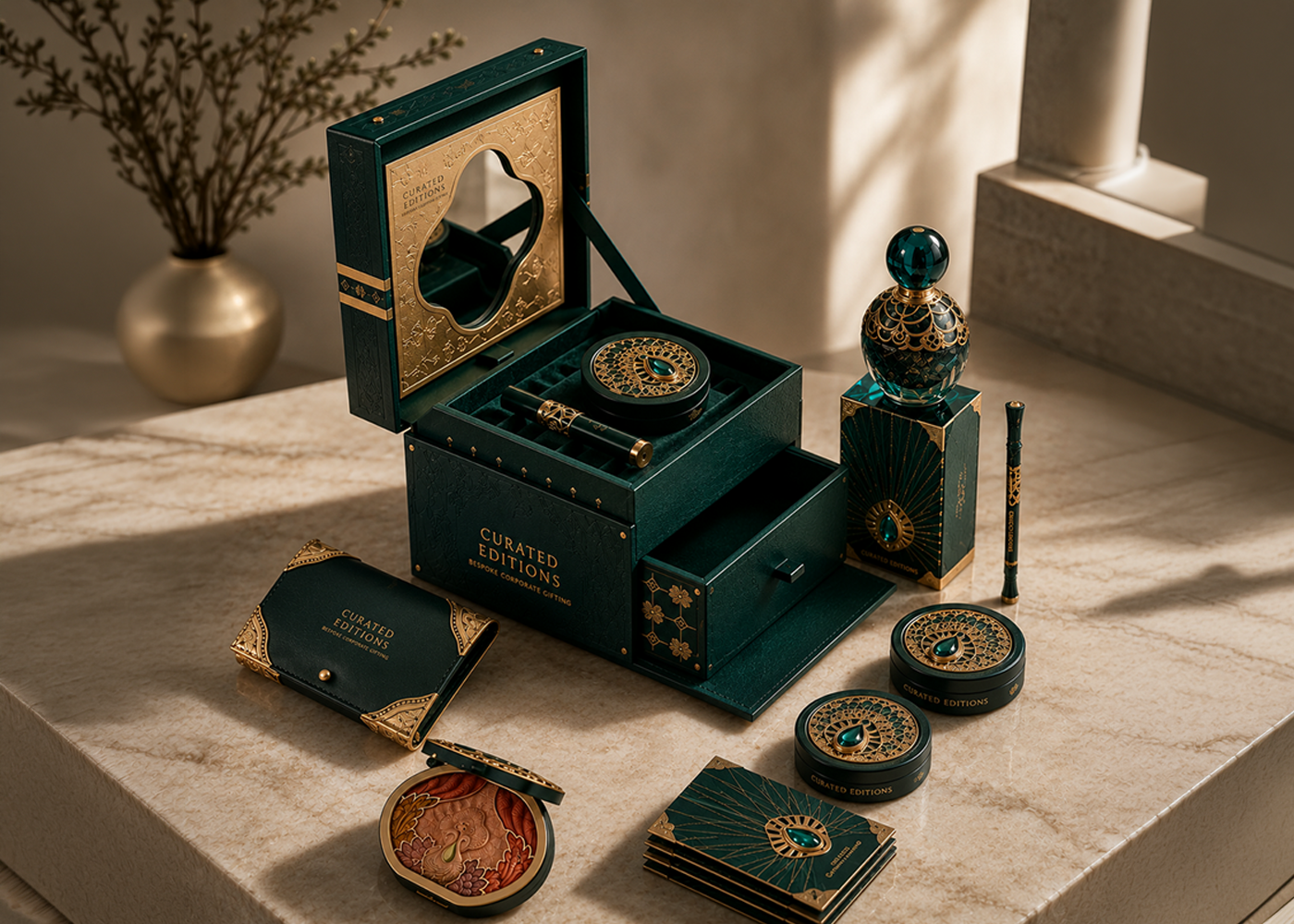
For companies expanding into the UAE and the wider GCC, business culture here rewards a particular kind of attentiveness — one where hospitality, generosity, and respect for relationship are woven into how deals are made and maintained. Corporate gifting sits squarely inside this culture, but it is frequently approached by newcomers with the wrong instincts: too generic, too transactional, or too Western in its assumptions about what a gift should be.
Here is what experience — and a great many conversations with clients across Dubai, Abu Dhabi, and the wider region — has taught us about getting it right.
## Timing carries as much meaning as the gift itself
In much of the Gulf, certain moments call for gifting almost as a matter of course: Ramadan and Eid, the opening of a new office or venture, the renewal of a long-standing partnership, and significant personal milestones within a client relationship. Sending a gift at the right moment — not simply the convenient one — signals that a company understands the culture it is operating within, not just doing business inside it.
A Ramadan gift sent too early or too late loses much of its warmth. An Eid gesture that arrives generic, rather than considered for the season, can read as an afterthought rather than a celebration shared.
## Restraint over spectacle
There is a common misconception that Gulf business culture rewards ostentation. In our experience, the opposite is closer to the truth among the clients who matter most. Senior leaders and long-established family businesses tend to notice — and respect — restraint: quality materials, considered craftsmanship, and design that doesn’t need to shout to be understood as premium. A gift that tries too hard to impress can undercut the very respect it’s meant to convey.
## Hierarchy and relationship still shape the gesture
Who receives a gift, and how it’s presented, still matters in ways that are easy for outside companies to overlook. A gift intended for a company should typically be presented with awareness of seniority and relationship — sent through the right contact, timed around the right occasion, and, where appropriate, distinguished for a founder or decision-maker versus a wider team. Uniform gifting has its place for large-scale gestures, but for key relationships, differentiation is often expected rather than optional.
## Local materials and craftsmanship carry weight
Gifts that reflect regional character — Arabic calligraphy used with genuine understanding rather than as decoration, materials sourced with an eye to quality and heritage, design language that nods to the region without leaning on cliché — tend to resonate far more than imported, generic corporate merchandise. It signals that a company has invested in understanding where it’s doing business, not simply doing business there.
## The takeaway
None of this is about following a rulebook. It’s about approaching corporate gifting in the Gulf the way the culture approaches relationships generally: with patience, attentiveness, and a genuine desire to make the other party feel valued. Companies that get this right find that their gifts open doors that emails and proposals alone rarely can.
If you’re building a gifting strategy for the region and want it to feel native rather than imported, that’s precisely the kind of work we do.
